
Your Cart
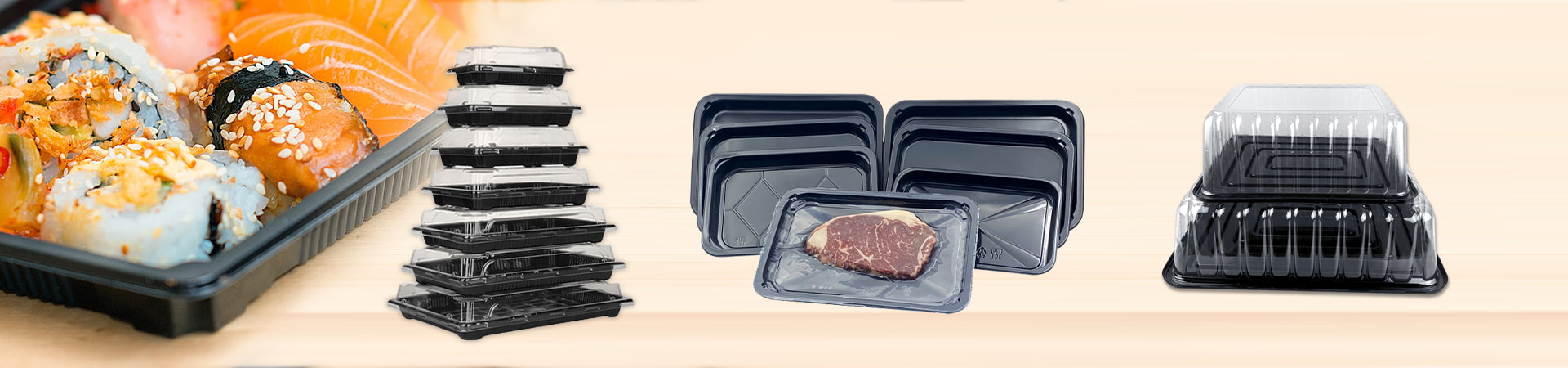
What Makes a Good Plastic Packaging Design for Food Products?
Walk down any supermarket aisle and the difference between good and bad food packaging design is immediately visible. The good examples show the product clearly, protect it completely, open easily, and stack stably on the shelf. The bad examples fog up, crack, leak, or bury an appetizing product inside an ill-fitting container. For food businesses, that difference is measured in spoilage rates, customer complaints, and repeat purchases.
A good food packaging design is not one feature but a balance of five: product protection, food safety, shelf presentation, user convenience, and cost efficiency. This guide breaks down each of those pillars, the specific design elements that deliver them, and how food businesses can evaluate a packaging design before committing to mass production.
The Five Pillars of Good Food Packaging Design
Every successful food package — from a clamshell of berries to a vacuum-sealed steak tray — succeeds on the same fundamentals. Weakness in any single pillar eventually becomes a business problem.
1. Product Protection: The package must hold the product still, absorb handling shocks, and survive stacking, vibration, and temperature swings through the whole supply chain. Protection is the non-negotiable foundation — a beautiful package that lets the product arrive damaged has failed completely.
2. Food Safety and Hygiene: The package is a food contact surface. It must be formed from food-grade materials, produced in hygienic conditions, and — where required — sealable to isolate the product from contamination. Safety features such as tamper-evident structures and hermetic seals belong in the original design, not a later revision.
3. Freshness Maintenance: Different foods need different atmospheres. Leafy produce needs ventilation; fresh meat and cheese benefit from vacuum or modified-atmosphere sealing; bakery items need moisture management. Matching the sealing strategy to the food is a core design decision, as explained in our comparison of skin sealing vs. MAP sealing.
4. Shelf Presentation: Packaging is the first bite — customers taste with their eyes. Clarity, product visibility, and an appetizing presentation convert browsing into purchasing.
5. Cost and Operational Efficiency: A good design is affordable to produce, efficient to fill on the line, dense to ship, and easy for the end user to open and reclose. Design decisions that ignore operations create costs every single day of production.
Protection: Designing the Product Into the Package
Good protection starts with geometry. In custom thermoformed packaging, the cavity is engineered around the product's exact shape so the food is cradled and immobilized. This principle — the product cannot move, so it cannot be damaged — is the foundation of custom blister packaging for food products, where each cavity matches the contours of the item it holds.
Cavity Fit: Deep enough to contain the tallest unit, tight enough to prevent shifting, with rounded corners that distribute stress instead of concentrating it.
Structural Reinforcement: Ribbing, stacking rims, and reinforced flanges add strength without adding much material. Modern examples of disposable food tray design innovation show how features like venting channels and anti-slip bases improve both protection and handling at the same time.
Closure Integrity: Lids must resist popping open under stacking load and transport vibration. Hinged clamshells need positive locking; film-sealed trays need a flange flat and wide enough for a reliable hermetic seal. A seal that fails in transit is a protection failure even if the plastic itself never breaks.
Temperature Behavior: Frozen foods, chilled ready meals, and microwaveable products each impose temperature demands on the material and the structure. Trays designed for fresh and frozen applications — such as ready meal trays — must maintain impact resistance at freezer temperatures and dimensional stability when heated.
Food Safety: Designing for Food Contact Compliance
Because the package touches the food, safety is designed in at material and process level — not inspected in afterwards.
Food-Grade Materials: PET, RPET, PP, and other common thermoforming resins are available in food-contact grades certified to frameworks such as FDA and EU food contact regulations. The design brief should specify the compliance standard and target markets from day one. Our introduction to PET material explains why PET is the default choice for transparent food packaging.
Hygienic Production: Even the best design fails if trays are formed in contaminated conditions. Look for manufacturers with clean production environments and traceable material lots.
Contamination Barrier: Hermetic film seals, tamper-evident closures, and full product enclosure protect the food from the moment it is packed to the moment it is opened. For delicate or premium items, custom food blister packaging delivers both safety and shelf appeal by fully enclosing each unit.
No Hidden Traps: Design details matter: crevices that trap soil, unsealed edges that wick moisture, or ink positioned where it contacts food. A design review from an experienced technical team — the kind described in our article on packaging design and technical support — catches these issues while they are still free to fix.
Presentation: Selling the Food Before It Is Tasted
In self-service retail, the package replaces the salesperson. Good presentation design is measurable: the shopper can see the product, judge its quality instantly, and read the essential information without handling the package.
Optical Clarity: High-transparency PET lets the true color and texture of the food show through — critical for fresh produce, bakery, and prepared meals. Premium presentation trays demonstrate how clear disposable meal trays elevate food presentation on the shelf and in delivery.
Anti-Fog Performance: Condensation on a clear lid makes even fresh food look unappealing. Anti-fog material or venting design keeps the view crisp in chilled display cabinets.
Upright, Stable Display: The package should present the food at its best angle and stack without hiding the product below. For fresh produce, professional guidance on selecting the right disposable fruit tray shows how clarity and ventilation together drive both freshness and visual appeal.
Branding Surface: Embossed logos, colored bases, printed film, and custom shapes turn generic containers into brand assets — without compromising the visibility of the food itself.
Usability: Designed for Filling Lines, Delivery, and the End User
A good design works for everyone who touches it: the packing operator, the delivery driver, the retail stocker, and finally the consumer eating the food.
Line Efficiency: Trays that stack, denest, and feed smoothly into filling and sealing equipment keep throughput high. Consistent flange dimensions are essential for film-sealing lines.
Delivery Survival: Takeaway and delivery add tilting, stacking under other orders, and long transit times. Leak-resistant closures and rigid bases are now baseline requirements for food service packaging — the evolution of the food tray from simple carrier to engineered system reflects exactly these rising demands.
Easy Open, Easy Reclose: Consumers should open the package without tools, spills, or torn film — yet the package must stay sealed until that moment. Reclosable lids extend usability for multi-serving products.
Right-Sized Portions: Compartments that keep components separate — sauce from salad, sauce from rice — are a usability feature that directly shapes customer perception of food quality on arrival.
Material Choice: The Design Decision Behind Everything Else
Material determines clarity, temperature range, sealing behavior, and cost — so it must be chosen before the geometry is finalized. A detailed material comparison for disposable food trays shows how the common options differ in practice.
PET / RPET: Excellent clarity and rigidity for cold and ambient foods; ideal for fresh produce, bakery, salads, and ready-to-display items. RPET adds recycled content for sustainability goals without sacrificing transparency.
PP: Handles heat — microwave and hot-fill — making it the natural choice for takeout and meal prep. A typical example is the disposable rectangle PP food tray used for takeout and meal prep applications.
Sustainability Targets: Where recyclability and material reduction matter, sustainable food tray design balances wall-thickness reduction, mono-material construction, and recycled content against the protection requirements — a trade-off that must be engineered, not assumed.
How to Validate a Food Packaging Design Before Mass Production
A design proves itself only in physical form. Before committing to production tooling, validate the design through samples.
Fit and Function Test: Fill samples with the real product and run through the actual packing workflow. Check insertion, sealing, stacking, and opening exactly as they will happen in production.
Transport Simulation: Pack filled samples into shipping cartons, stack them, and subject them to realistic vibration and drop. Designs that pass on the bench but fail in the van are common — and cheap to fix at the sample stage.
Food Contact Verification: Confirm compliance documentation for the final material, colorant, and production process — not just the base resin.
Structured development and testing services and sample programs exist precisely for this stage: iterate cheaply on samples, then lock the design for production. Combined with professional customization services, a food business can move from concept to a validated, production-ready design without guesswork.
Frequently Asked Questions
What is the most important element of food packaging design?
Protection and food safety come first — a package that fails to protect or contamates the product has failed regardless of how it looks. Presentation and usability then determine how well the package performs commercially. The best designs deliver all of these simultaneously rather than trading one away.
Which plastic material is best for food packaging?
There is no single best material — only the best match. PET and RPET excel for transparent, chilled, ambient display packaging; PP is preferred for hot food, microwave use, and takeout. The choice depends on temperature range, sealing method, clarity needs, and sustainability targets.
How does packaging design affect shelf life?
Shelf life is shaped by the sealing strategy and atmosphere inside the package. Vented designs suit respiring produce; vacuum skin and MAP sealing extend life for meat, seafood, and cheese by limiting oxidation and microbial growth. The structural seal quality determines whether that atmosphere is actually maintained.
Can food packaging design be both sustainable and protective?
Yes, when sustainability is engineered rather than assumed. RPET materials, reduced wall thickness with ribbed reinforcement, and mono-material structures deliver measurably lower material use while preserving protection. The key is validating strength on samples rather than cutting material blindly.
How do I test a new packaging design before ordering in volume?
Request prototype samples, fill them with the real product, and test the full journey: sealing on your line, stacking in cartons, transport simulation, and consumer opening. Only after the sample passes every stage should the design be locked for mass production tooling.
Good Design Is a Balance, Not a Feature
A good food packaging design protects the product, keeps food safe, holds freshness, presents the food attractively, and runs efficiently — all at a defensible cost. None of these pillars is optional; the weakest one sets the real-world performance of the whole package.
The path to that balance is structured: define the product's real requirements, choose the material against those requirements, engineer the geometry and sealing strategy deliberately, and validate every decision on physical samples before tooling.
Jiasheng designs and manufactures food packaging with this discipline — offering full customization, free samples for evaluation, and development and testing support from concept through mass production. Tell us about your product and market, and our team will help you design packaging that performs on every pillar.
Start Your Food Packaging Design Today
Share your product details, target market, and compliance requirements. Our design team will propose a solution — with samples to validate before you commit to production.
Request a Design Consultation