
Your Cart
Premium Fruit Trays for Supermarket Retail: How to Reduce Damage and Sell Fresh Fruit at Full Price
Walk down the berry section of any modern supermarket and the packaging is doing most of the selling. Shoppers give a punnet about three seconds of attention, and in that window they judge freshness, grade, and price — all before reading a word on the label. For growers and packers, that means the tray is no longer a container. It is the difference between selling at full price and filling the markdown shelf.
The produce aisle has been moving upmarket for several seasons now, and 2026 has made it official: retailers are segmenting fruit into standard and premium tiers, and they expect packaging that supports the difference. This article looks at what premium fruit trays have to do — physically and commercially — and which details are worth checking before you commit an order.
Why Packaging Now Sets the Price Tier
Fresh fruit is the highest-margin and highest-loss category in the fresh aisle at the same time. Industry estimates put post-harvest loss for fruit and vegetables at 20–30% in many markets, versus around 5% where packaging, cold chains, and handling are standardized. Packaging choice is one of the biggest levers in that gap — and retailers know it.
Three shifts are driving the premium tier:
The three-second shelf scan: Rigid, transparent, well-stacked packs read as fresh and carefully handled. Crushed clamshells and condensation-fogged lids read as old, regardless of what is inside.
Premium tiering by format: Retailers increasingly separate everyday fruit from gift and seasonal lines by packaging alone. A glossy golden tray with strawberries reads as a gift; the same fruit in a basic punnet reads as a loss leader. The finish is doing pricing work.
Freight and loss pressure: With freight costs elevated, packers are looking for trays that are light, nest efficiently, and survive the cold chain — because every percent of damage is paid for twice: once in product, once in freight.
What Actually Damages Fruit Between Pack-House and Shelf
Most losses trace back to four mechanisms, and each one points to a specific tray design decision.
Compression in the stack: Pallets and shelf-ready cases put real weight on the bottom layer. Sidewalls without ribs flex, and flexing transfers load straight onto the fruit. A ribbed sidewall is not decoration — it is the structure that lets a tray carry its share of the stack.
Condensation and drip: Temperature swings in the cold chain cause moisture to form on inner surfaces. Where it pools, fruit rots in contact spots. Anti-fog material grades and a tray geometry that keeps fruit off the walls both reduce this.
Abrasion and bruising: Loose fruit rolls. A tray with the right footprint and a shallow center recess limits movement — berries need containment, not room.
Cold-chain brittleness: Material grades differ in how they behave near 0 °C. A tray that passes a room-temperature drop test can still crack coming out of a chilled distribution center if the grade is wrong.
Design Details That Decide Whether the Tray Protects
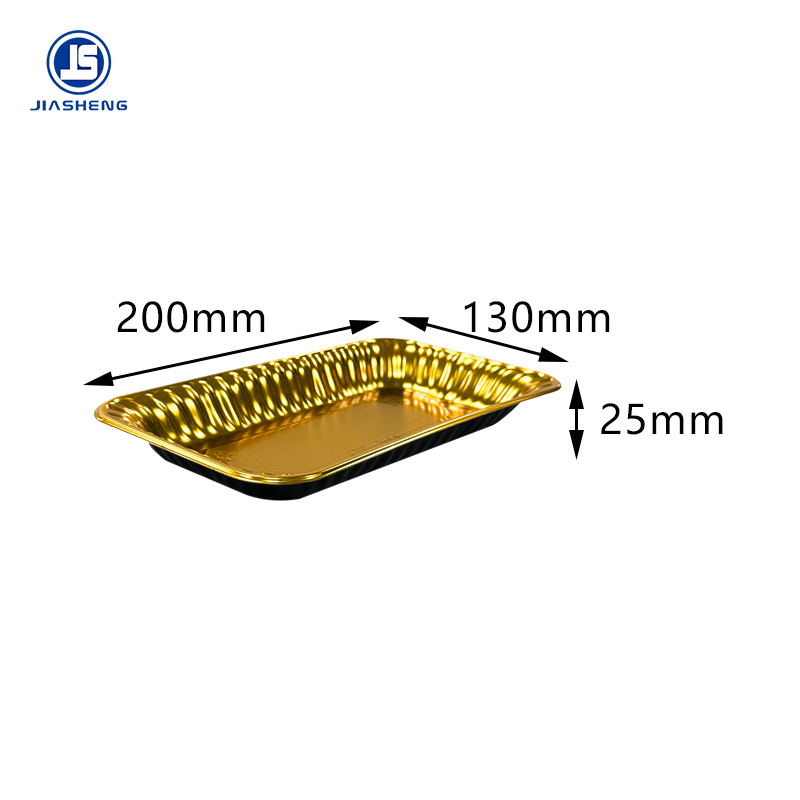
Ribbed sidewalls and a stiff rim: The vertical ribs on trays like the 200 × 130 × 25 mm format above are what keep the walls standing under stack load, and the rolled rim is what the lid seals against. Check both before comparing prices.
Depth matched to the fruit: A 25–27 mm tray suits strawberries, blueberries, and cherries in a single retail layer; deeper fruit or mixed weights need a taller format, such as the 200 × 150 × 27 mm and 250 × 140 × 27 mm variants in the same family.
Ventilation versus sealing: Whole berries and hard fruit usually breathe better with vented formats — vented blueberry clamshells are the reference case. Cut fruit, ready-to-eat lines, and anything smell-sensitive need a sealed pack instead. Getting this wrong trades shelf life for nothing.
A clean label zone: The top surface should have a flat, recessed area so the brand label survives stacking without scuffing — a small detail that decides whether the pack still looks premium at the shelf.
Nesting behavior: Empty trays should nest to a sensible height for return logistics or storage, without interlocking so tightly that filled trays jam apart at packing speed.
Finish: How the Same Tray Sells at Two Price Points
Material family is a compliance and recycling decision; finish is a merchandising decision. Both are worth making deliberately.
Clear PET for everyday transparency:Transparent fruit packaging boxes let the fruit color do the selling and stay inside the PET recycling stream that most markets already collect.
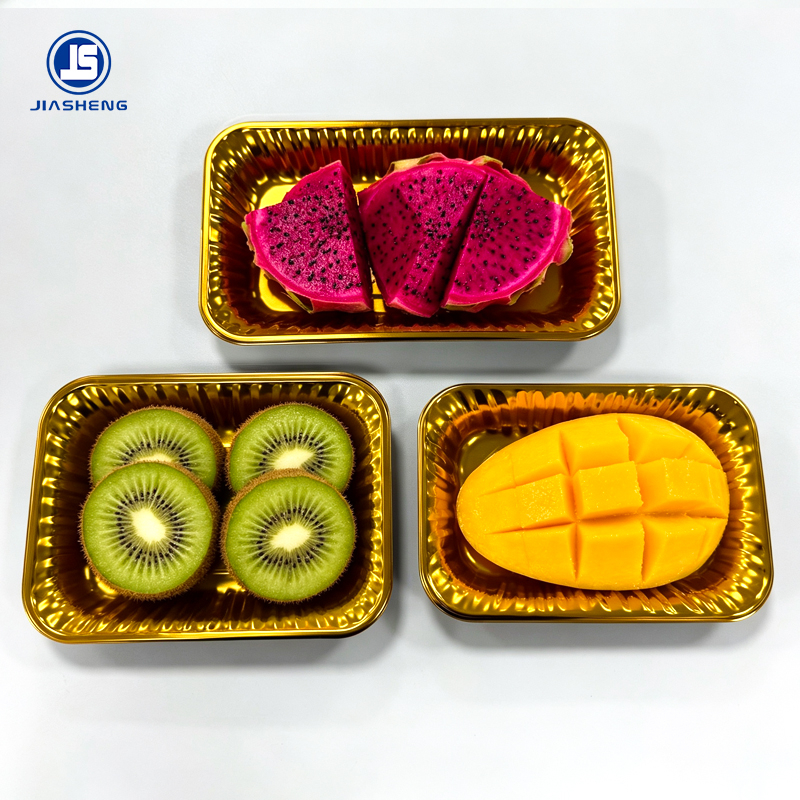
Glossy golden PET for the premium and gifting tier: Metallic finishes create contrast that makes red berries and dark cherries pop under supermarket lighting — exactly the effect behind glossy golden PET fruit trays built for strawberry, blueberry, and citrus programs in supermarket retail. The finish signals gift, and gift signals price.
One family, several formats: Sizing a whole tray family around a few footprints — as the 200 × 130, 200 × 150, and 250 × 140 mm formats above do — keeps lids, labels, and case configurations consistent across SKUs, which simplifies both packing and retail replenishment.
Six Things to Confirm Before Ordering
1. Fruit profile and weight: Variety, single-layer or mixed, and fill weight decide depth and stiffness requirements.
2. Venting or sealing: Whole and breathing, or cut and sealed. This single answer eliminates half the format options.
3. Stack height and case count: How many trays per case, how many cases per layer on the pallet. The tray must carry its real load, not a laboratory one.
4. Lid and label plan: Flat label zone, lid fit, and whether the retail program needs a printable or writable surface.
5. Market compliance: Food-contact certification for the finished tray, and — for the EU — packaging that fits recyclability rules. For most fruit programs this points to the PET stream, which plastic fruit and vegetable packaging containers already follow.
6. Samples on real fruit: Confirm compression, condensation, and lid fit with your actual product and your actual case configuration before the production run. Deeper selection guidance is covered in our article on choosing the right disposable fruit tray.
Four Questions to Ask a Fruit Tray Supplier
1. What food-contact documentation comes with the finished tray? Certification should cover the tray as shipped, with batch documentation your market requires.
2. How do the trays perform after cold-chain cycling? Ask for low-temperature handling evidence, not just room-temperature drop tests.
3. Can the family share footprints across fruit lines? Common footprints cut tooling spend and keep lids and labels interchangeable across SKUs.
4. What is the sample loop before production? Custom sizes and finishes should go through real-fruit trials first — customization services typically include this iteration before tooling is fixed.
Frequently Asked Questions
Are golden trays food-safe for direct fruit contact?
Yes, when produced in food-grade PET with certification for the finished tray. The metallic appearance comes from the material finish, not a coating that touches the fruit. Always request food-contact documentation at the pack level.
Vented or sealed packaging for berries?
Whole berries generally perform better vented, because trapped moisture accelerates mold. Cut fruit, fruit cups, and prepared lines need sealed packs. Match the format to how the fruit respires and how long the supply chain is.
Is PET recyclable after use?
Clear and golden PET-family trays fit the established PET recycling stream in most markets, which is one reason they are favored under tightening packaging rules. Confirm the requirements of your destination market before finalizing material.
What tray sizes suit strawberries and cherries?
Single-layer retail formats in the 25–27 mm depth range are the norm — for example 200 × 130 × 25 mm for standard punnets and 250 × 140 × 27 mm for larger gift formats. The right answer depends on fill weight and case count, so size from your actual fruit.
What is the typical minimum order for custom sizes?
Standard molds usually carry low minimums; a custom footprint requires tooling and a volume that justifies it. Sharing your annual volume and size range early lets a supplier tell you honestly whether a custom mold pays for itself.
Packaging Is the First Quality Signal
In the premium produce aisle, the tray speaks before the label does. Ribbed structure that survives the stack, ventilation matched to the fruit, a clean label zone, and a finish that matches the price tier — these details decide whether berries sell at full price or end up on the markdown shelf.
Jiasheng manufactures food-grade thermoformed fruit trays in clear and glossy golden finishes, with standard footprints for fast supply and custom sizes with sample support. Send us your fruit type, fill weight, and market, and we will recommend a tray that protects the product and sells the tier.
Get Premium Fruit Trays for Your Retail Program
Tell us your fruit type, fill weight, and target market. We will quote a food-grade tray with samples for real-fruit testing.
Request Fruit Tray Samples