
Your Cart
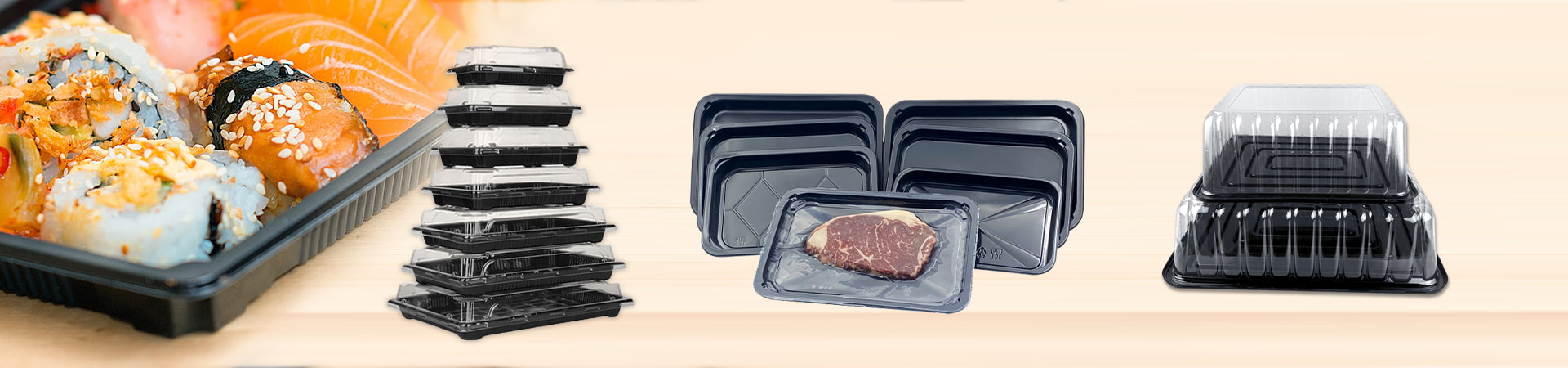
PET vs PP Food Packaging: How to Choose the Right Material for Your Products
Choosing the right plastic material is one of the most consequential decisions food brands make when developing packaging. PET vs PP food packaging is a comparison that procurement teams, R&D managers, and packaging engineers face routinely—yet a surprising number of decisions default to what the supplier has in stock rather than what the product actually needs. An incorrect material choice can cascade into poor product presentation on shelf, insufficient protection during distribution, higher packaging costs than necessary, and storage conditions incompatible with the product's temperature profile.
This guide is written for food industry decision-makers who need more than a material data sheet. We examine the five dimensions that drive food packaging material selection: optical clarity and shelf appeal, thermal performance and temperature tolerance, mechanical durability and impact resistance, total material economics, and application-specific suitability across real food categories. Whether you are a sushi chain specifying disposable containers, a bakery brand launching a new pastry line, or a meal-prep company scaling production, the PET-vs-PP decision shapes your unit cost, your brand perception, and your operational logistics in ways that compound across volume.
Both PET and PP are food-grade thermoplastics with decades of safe-use history. Their processing characteristics—thermoformability, sealability, and compatibility with automated filling lines—make them the two dominant materials in disposable food packaging. Understanding where each excels and where each falls short is the difference between packaging that fits your product and packaging that fights it.
Understanding PET Food Packaging
Polyethylene terephthalate, or PET, is the most widely recognized plastic in food retail—and for good reason. Its defining characteristic is crystal-clear transparency that rivals glass at a fraction of the weight and cost. PET's optical clarity is not cosmetic; it is commercially meaningful because it allows consumers to evaluate food quality, freshness, and color directly through the package—a factor that consistently ranks as a top-3 purchase driver in retail food studies.
Key Advantages of PET for Food Packaging
- Exceptional transparency and gloss: PET delivers the highest clarity of any thermoformed food-grade plastic. For sushi displays, fruit packaging, deli containers, and premium bakery items where visual presentation directly influences purchase decisions, PET is the material against which alternatives are measured.
- Good rigidity and shape retention: PET containers hold their geometry well under moderate stacking loads, maintaining a premium shelf appearance without warping or collapsing. This rigidity is especially valued in retail environments where packages sit on shelves at ambient temperature for hours.
- Broad recyclability infrastructure: PET is the most recycled plastic globally, with established collection, sorting, and reprocessing systems in most developed markets. For brands with sustainability commitments, PET offers a well-understood end-of-life pathway that PP's recycling infrastructure has not yet matched at comparable scale.
- Good gas barrier properties: PET provides moderate oxygen and CO₂ barrier performance, helping maintain freshness in packaged foods with shelf-life requirements measured in days to weeks.
Common PET Food Packaging Applications
PET dominates in categories where visual presentation is the primary packaging function: sushi containers, salad bowls, fruit and berry clamshells, cake domes, macaron trays, sandwich wedges, and deli display containers. For food brands requiring material transparency across retail display environments, PET food packaging from a manufacturer with deep tooling experience ensures your product looks as intended from fulfillment center to consumer hand.
Understanding PP Food Packaging
Polypropylene, or PP, is the workhorse of functional food packaging. Where PET excels at display, PP excels at heat resistance, impact toughness, and cost-efficient durability. PP is the material food-service operators turn to when packaging needs to survive microwave reheating, hot-fill temperatures, or rough handling in delivery bags—conditions where PET's performance envelope narrows.
Key Advantages of PP for Food Packaging
- Superior heat resistance: PP withstands continuous-use temperatures of 100-120°C, making it suitable for microwave reheating, hot-fill applications, and food products served warm. PET begins to soften and deform above approximately 70°C, which eliminates it from most hot-food packaging applications.
- High impact resistance and crack tolerance: PP's molecular structure gives it the flexibility to absorb impact without cracking—a critical property for meal-prep containers that are frozen, dropped into delivery bags, and stacked in transit. Where PET can develop stress cracks under repeated mechanical loading, PP tends to deform elastically and recover.
- Lower material density and unit cost: PP has a lower density than PET (approximately 0.90 g/cm³ vs. 1.35 g/cm³), meaning fewer grams of resin per container at equivalent wall thickness. This density advantage translates into a material-cost saving that compounds meaningfully at high volumes.
- Good chemical resistance: PP resists degradation from oils, acids, and alkaline foods better than many alternatives, making it a durable choice for prepared meals with diverse ingredient profiles.
Common PP Food Packaging Applications
PP is the material of choice for meal-prep containers, microwave-safe food trays, hot-takeaway boxes, deli containers requiring reheat capability, and food-service trays designed for rough logistics. It also appears increasingly in PP food packaging for bakery items that benefit from durable, stackable transport containers, especially in wholesale and food-service distribution channels where visual presentation trades off against survivability.
PET vs PP Food Packaging: Key Differences
The table below maps the operational dimensions that purchasing and R&D teams evaluate when selecting food packaging materials. Understanding these differences at the specification level—not the marketing-brochure level—is what separates packaging that performs in the field from packaging that disappoints at scale.
| Feature | PET | PP |
|---|---|---|
| Transparency | Excellent, crystal-clear | Good, semi-translucent to transparent |
| Heat Resistance | Moderate (~70°C max continuous) | Higher (100-120°C, microwave-safe) |
| Rigidity | Higher, stiffer structure | Flexible, less rigid |
| Impact Resistance | Good but can crack under stress | Excellent, elastic deformation |
| Density (g/cm³) | ~1.35 | ~0.90 |
| Cold Temperature | Good, freezer-compatible | Good, may become brittle below -20°C |
| Recyclability | Broadly recycled (Code 1) | Recyclable (Code 5), limited infrastructure |
| Material Cost | Moderate | Lower (less resin per unit) |
| Best Applications | Sushi, cakes, salads, fruit, deli display | Meal trays, hot food, microwavable, food service |
The bottom line: PET wins on visual presentation and recycling infrastructure; PP wins on thermal performance and impact durability. Your product's temperature profile, distribution path, and shelf-display requirements should be the tiebreakers—not supplier preference or price alone.
Which Material Is Better for Different Food Applications?
Sushi Packaging
Sushi is a visual food. Customers assess freshness, ingredient quality, and portion size visually before they touch the container. This makes PET the preferred material for sushi packaging. Its crystal clarity displays salmon color, avocado green, and rice texture without the slight haze that PP introduces. Rigidity is equally important: PET sushi trays hold their shape under condensation from chilled product and maintain stack stability in refrigerated display cases. For sushi brands that differentiate on premium presentation—from supermarket grab-and-go to high-end takeout—custom sushi packaging solutions in PET deliver the shelf appeal that drives both initial purchase and repeat buying.
Bakery Packaging
Bakery packaging spans a wide performance envelope, making material selection more nuanced. PET dominates for display-oriented bakery items: cake domes, macaron tray inserts, cupcake containers, and pastry clamshells where consumers need to see the product through the package. The rigidity of PET also prevents delicate frosting and decorations from being disturbed by container flex during handling. For wholesale bakery trays, transport containers, and items requiring hot-fill or post-bake packaging, PP offers better impact protection and thermal tolerance at a lower unit cost. Many bakery brands use both materials across their product lines, deploying PET at retail points of sale and PP in distribution and food-service channels. For bakery-specific thermoformed solutions, explore our range of custom bakery packaging designed for both display and transport.
Salad and Fresh Food Packaging
Fresh salad packaging sits at the intersection of display and durability. PET salad bowls and clamshells provide the transparency consumers expect when evaluating leafy greens, mixed vegetables, and prepared salads—condensation resistance and clarity remain consistent through the refrigerated cold chain. For meal-prep applications where the consumer may reheat the container, PP offers microwave compatibility that PET cannot match. Many cold-chain salad brands standardize on PET for retail display and PP for food-service and delivery-only formats where reheating is part of the use case. See our plastic salad containers available in both food-grade PET and PP, with lid options configured for your cold-chain distribution requirements.
Fruit and Vegetable Packaging
Fruit and vegetable packaging depends heavily on supply-chain handling conditions. PET berry clamshells, grape bags, and cut-fruit containers dominate retail because they show freshness at a glance and resist condensation that can fog opaque materials. PP enters the picture for bulk transport trays, wholesale crates, and food-service formats where visibility is secondary to stacking strength and cost per unit. The ventilation requirements of fresh produce—whether laser-cut holes, mesh vents, or gap lids—are achievable in both materials, though PET's stiffness may allow larger vents without compromising structural integrity.
Factors to Consider When Choosing Food Packaging Materials
Material selection is not an isolated decision—it intersects with product characteristics, operational realities, and regulatory requirements. Experienced buyers evaluate food grade plastic packaging across these four dimensions before writing a specification:
1. Product Temperature Requirements
This is the single most consequential filter. If your product is served hot, reheated by the consumer, or hot-filled during production, PP is the default—PET will soften and deform above approximately 70°C. For ambient, chilled, or frozen products, both materials are viable, and the decision shifts to the other factors below. Map your product's complete temperature journey: production line, storage, distribution, retail display, and consumer end-use. A material that works at each stage individually must work across the entire chain.
2. Product Visibility and Brand Presentation
If consumer purchase decisions hinge on seeing the product—as they do with sushi, bakery, fresh produce, and prepared deli items—PET's superior clarity delivers measurable commercial value. The visual difference between crystal-clear PET and slightly hazy PP is immediately apparent on shelf. If your brand equity is built on premium presentation, PET is the material that supports that positioning without compromise.
3. Transportation and Distribution Conditions
Evaluate the mechanical demands your packaging will face: stacking height in distribution centers, vibration during truck transport, potential drop impact in last-mile delivery, and handling frequency across the supply chain. PP's impact toughness and crack resistance make it the safer choice for containers that travel through rough logistics environments. PET's rigidity suits retail display but demands more careful handling in transit. For many national brands, regional distribution hubs and retail-ready packaging designs mitigate transit risk, making PET viable across wider distribution geographies than might be assumed.
4. Food Safety and Regulatory Compliance
Both PET and PP are widely accepted as food-contact-safe materials under FDA 21 CFR, EU Regulation 10/2011, and equivalent frameworks in most markets. The critical variable is not the base resin but the supply chain: verify that your packaging manufacturer sources certified food-grade material, maintains documented traceability from resin lot to finished container, and can provide migration test data when your application requires it. A supplier who sources food-grade resin from audited suppliers and runs in-process material verification provides a compliance foundation that cannot be retrofitted after production is complete.
Why Choose a Professional Custom Food Packaging Manufacturer?
The manufacturer you select is often more determinative of packaging outcomes than the material you choose. PET and PP are available from any resin distributor. What transforms them into packaging that consistently performs in your application is the engineering, tooling, and quality infrastructure behind the forming process. When evaluating custom food packaging manufacturer partners, prioritize these four capabilities:
Material Recommendation Based on Use Case
A capable manufacturer contributes materially to specification. They analyze your food type, storage temperature, distribution conditions, and shelf-life requirements, then recommend not just PET or PP but the specific grade, thickness distribution, and forming parameters that optimize for your application profile. Generic recommendations ("PP is better for heat") indicate a transactional supplier; specific recommendations ("PP homopolymer at 0.45mm, oriented in the machine direction for hot-fill stability at 90°C") indicate a manufacturing partner.
Custom Thermoforming Capability with In-House Tooling
Off-the-shelf tooling limits your container geometry to what the mold library offers. In-house mold design and CNC machining capability lets you optimize cavity dimensions, draft angles, undercut features, and material distribution for your specific product—not for a generic product of similar size. This is the difference between a container that "works" and one that is engineered to your product's exact geometry, filling-line parameters, and stacking requirements. For brands requiring fully custom thermoformed plastic packaging, in-house tooling shortens design-to-production lead times from months to weeks and eliminates the markup of a third-party mold shop.
Quality Control Embedded in Production
Consistent wall thickness, cosmetic defect rates below your acceptance threshold, and dimensional repeatability across production runs require more than a QC inspector at the end of the conveyor. Look for statistical process control (SPC) data—capability indices like Cpk/Ppk on critical-to-quality dimensions—not just pass/fail inspection. A manufacturer who can show you that wall-thickness variation is under process control, not just under inspection control, is one who can deliver at scale without quality deterioration as volumes increase.
Multi-Material, Multi-Format Capability
The operational simplicity of working with one manufacturer who produces PET packaging, PP packaging, food trays, clamshells, and custom containers under a single quality management system is hard to overstate. One technical team, one QC framework, one logistics relationship, one set of compliance documentation. Jiasheng provides exactly this: customized thermoformed food packaging solutions—in both PET and PP, across every food application category discussed in this guide—from a single engineering and manufacturing team.
Frequently Asked Questions
Q: Is PET or PP better for food packaging?
There is no universal answer—the better material depends entirely on your application. PET is superior for product visibility, rigidity, and recyclability. PP is superior for heat resistance, impact toughness, and material economics. The right choice is the one that matches your food type, temperature requirements, and display needs, not the one that your current supplier happens to stock most readily.
Q: Is PET food packaging safe?
PET has been safely used in food packaging for decades and is approved for food contact by major regulatory agencies including the FDA, EFSA, and equivalent authorities globally. The key is ensuring the specific PET grade used is certified as food-grade by the resin manufacturer and that the packaging supplier maintains documented material traceability throughout production.
Q: Can PET and PP packaging be fully customized?
Yes. Both PET and PP are thermoformable, meaning they can be heated, formed into custom mold cavities, and trimmed to produce containers in virtually any shape, size, depth, and compartment configuration. Wall thickness, surface texture, lid fitment, and venting are all independently controllable variables in the thermoforming process for both materials.
Q: Which material is better for sushi packaging?
PET is the standard for sushi packaging because its crystal transparency allows consumers to evaluate sushi quality, freshness, and color directly. The rigidity of PET also helps containers maintain shape under condensation from chilled product in refrigerated display cases, which is critical for premium presentation in both retail and food-service environments.
Q: Is PP the only choice for microwave-safe food packaging?
PP is the most common microwave-safe thermoformed plastic for food packaging, but it is not the only option. CPET (crystallized PET) is a variant of PET engineered for higher heat resistance (up to 220°C) and is used in dual-ovenable trays. However, CPET is more expensive than PP and is typically reserved for premium frozen meal applications. For standard microwave-safe containers at commercial volumes, PP remains the cost-effective default.
Q: How do I know if my supplier is using genuine food-grade material?
Request a material certification from the resin lot (often called a Certificate of Analysis or CoA) showing the resin grade, manufacturer, and food-contact compliance status. Reputable packaging manufacturers can provide this documentation as a standard part of their quality package. If a supplier cannot or will not provide resin traceability, that is a procurement caution flag—regardless of price.
Conclusion: Match the Material to the Food, Not the Other Way Around
The PET vs PP food packaging decision is not about which material is universally better—it is about which material aligns with your food product's temperature profile, display requirements, distribution conditions, and brand positioning. PET claims the advantage on visual clarity, rigidity, and established recycling infrastructure—making it the preferred choice for sushi, bakery display, fresh produce, and cold-chain retail where consumers buy with their eyes. PP claims the advantage on heat resistance, impact toughness, and per-unit material cost—making it the standard for meal-prep containers, microwave-safe food trays, hot-food takeaway, and food-service logistics where package survivability matters more than shelf gloss.
Many food brands use both materials across their product portfolios—deploying PET at retail points of sale and PP in food-service and delivery channels. An experienced manufacturing partner who produces both PET and PP packaging under a single quality framework lets you optimize material choice SKU by SKU without multiplying your supplier management overhead.