
Your Cart
How to Choose a Custom Plastic Packaging Manufacturer for International Shipping
For overseas buyers sourcing plastic packaging, evaluating a custom plastic packaging manufacturer involves much more than checking product samples and comparing unit prices. Export experience, packaging protection during ocean freight, production planning for international timelines, customs documentation, and logistics coordination all directly affect whether products arrive intact, on schedule, and ready for use.
A manufacturer that produces excellent packaging but lacks export capability can create costly problems: shipments that arrive damaged due to inadequate export packing, customs delays caused by incomplete documentation, or production schedules that do not account for the longer lead times international orders require. This guide covers the key factors overseas buyers should evaluate when selecting a custom plastic packaging manufacturer with the export experience needed to deliver reliably across borders.
Why Export Experience Matters When Choosing a Manufacturer
Domestic manufacturing expertise does not automatically translate to international delivery capability. A plastic packaging manufacturer with established export experience brings several practical advantages that directly reduce risk for overseas buyers.
Communication Efficiency: Export-experienced manufacturers understand international business communication norms, can discuss specifications in English or other relevant languages, and are familiar with the documentation and information exchange patterns that international orders require. This reduces misunderstandings that could delay production or result in packaging that does not match specifications.
Production Scheduling: International orders involve longer lead times than domestic ones, and experienced manufacturers build this into their planning rather than treating export orders as an afterthought. They understand the cascading effects of production delays on shipping schedules, port cut-off times, and final delivery dates.
Documentation Support: International shipments require commercial invoices, packing lists, bills of lading, certificates of origin, and sometimes additional documentation specific to the destination country's import regulations. A manufacturer familiar with these requirements can prepare complete and accurate paperwork, avoiding customs clearance delays.
Delivery Reliability: The distance between a manufacturing facility and an overseas destination creates multiple points where things can go wrong. Export-experienced manufacturers have established relationships with freight forwarders, understand different shipping methods (FCL, LCL, air freight), and can recommend the most appropriate logistics approach for each order.
Packaging Protection During International Transportation
One of the biggest concerns for overseas buyers importing thermoformed plastic packaging is whether products will arrive undamaged after weeks at sea. A manufacturer's approach to export packing makes the difference between products that reach their destination in perfect condition and products that arrive crushed, scratched, or unusable.
A professional export plastic packaging approach includes several layers of protection:
Export-Grade Cartons: Unlike cartons designed for domestic truck delivery, export cartons must withstand the cumulative forces of container loading, port handling, ocean voyage vibration, and destination unloading. Professional manufacturers use double-wall or triple-wall corrugated cartons with appropriate bursting strength ratings for the product weight and stacking height required during container transport.
Wooden Pallets and Cases: For heavy or fragile loads, wooden pallets provide a stable base that prevents cartons from shifting during transit. In some cases, full wooden crates or cases offer the highest level of protection for sensitive or high-value packaging products by creating a rigid outer structure that absorbs impact and prevents compression damage.
Internal Protective Packing: Within each carton, individual plastic containers and trays need separation and cushioning to prevent scratching, nesting damage, or deformation. Manufacturers use partition inserts, individual wrapping, or layer separators depending on the product type and fragility.
Container Loading Optimization: Proper container loading maximizes space utilization while maintaining load stability. Experienced manufacturers plan pallet configurations and carton stacking patterns to ensure that products are not compressed by shifting loads during ocean transport. Container loading plans also help customs inspectors quickly verify shipment contents without unnecessary unpacking.
Production Planning for Large International Orders
International orders differ from domestic ones in scale, timeline, and coordination requirements. A structured production planning process helps ensure that large-volume export orders are delivered on time and to specification.
Sample Confirmation: Before mass production begins, pre-production samples allow buyers to verify that packaging dimensions, material selection, and quality meet specifications. For first-time orders, sample approval is a critical step that prevents the costly mistake of producing an entire order based on an incorrect assumption.
Production Scheduling: A reliable custom plastic packaging supplier provides a clear production timeline that accounts for material procurement, mold preparation (if custom molds are required), thermoforming production, trimming and quality inspection, and final packing. The timeline should include buffer time for unexpected issues rather than assuming everything will proceed without interruption.
In-Process Quality Inspection: Quality control should not wait until the end of production. Inspections at key production stages — material verification, forming quality, trimming accuracy — allow issues to be identified and corrected before they affect the entire batch.
Final Packing and Documentation: Once production and inspection are complete, the final packing stage prepares products for international shipping. This includes carton labeling with handling instructions and shipment details, pallet wrapping for stability, and preparation of the shipping documentation package that will accompany the goods through customs.
Quality Control Before Shipment
For international orders, pre-shipment quality control is not optional — it is the last opportunity to catch issues before products leave the country of origin. Once goods are loaded into a container and dispatched, correcting quality problems becomes exponentially more difficult and expensive.
A comprehensive pre-shipment inspection conducted by the plastic packaging factory typically covers four areas:
Material Inspection: Verification that the plastic material used matches the approved specification — correct resin type (PET, PP, or other), appropriate thickness, and consistent color. For food-grade applications, material certification documentation should be available for review.
Dimensional Inspection: Random sampling to confirm that formed trays and containers match the specified dimensions within acceptable tolerances. Dimensional consistency is particularly important for packaging that must fit into automated packing lines, display fixtures, or secondary packaging.
Appearance Inspection: Visual checks for defects such as scratches, warping, inconsistent clarity, rough edges, or forming irregularities. For transparent PET packaging where product visibility matters, appearance quality directly affects the end customer's perception of both the packaging and the product inside.
Packaging Inspection: Confirmation that export cartons are correctly assembled, properly labeled, and filled according to the packing specification. This includes verifying carton counts, pallet configurations, and shipping marks to ensure the receiving warehouse can identify and process the shipment efficiently.
Supporting Different Packaging Projects Across Industries
A custom food packaging manufacturer with diversified experience can serve buyers across multiple product categories, reducing the need to manage multiple supplier relationships. The following applications represent the primary packaging types that a capable manufacturer should handle.
Food Packaging
Food packaging for export markets must meet the destination country's food contact regulations while maintaining product protection across long transit times.
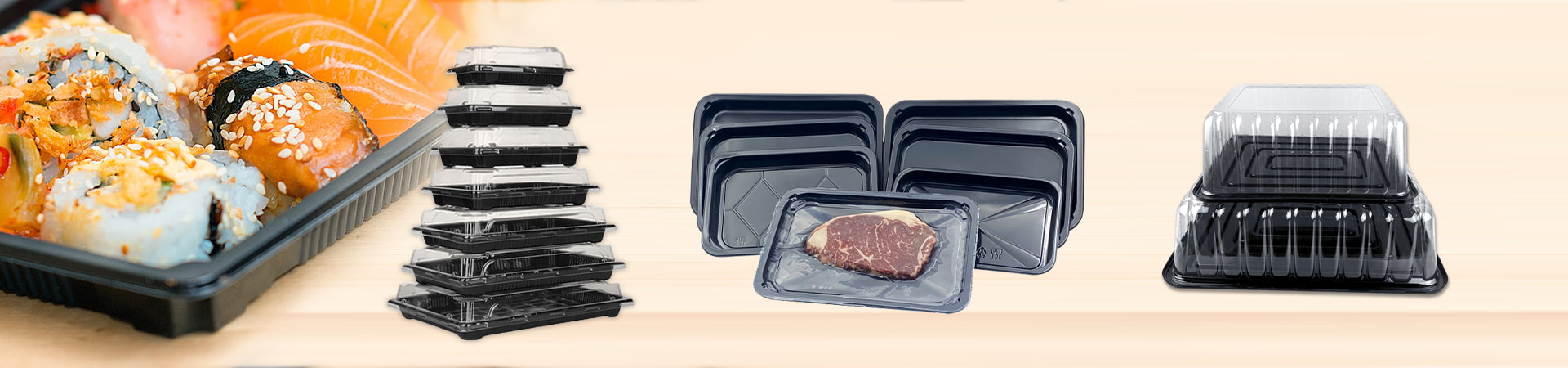
- Sushi Containers: Export-grade custom food packaging for sushi requires clear PET trays with secure lid fit that keeps pieces in position during extended transport. For overseas buyers, packaging must not only present sushi attractively but also survive the handling involved in international logistics.
- Salad Containers:Plastic salad containers for export need leak-resistant sealing and sufficient structural strength to prevent crushing when stacked inside shipping cartons and containers.
- Food Trays:Plastic food trays for meal prep companies, supermarkets, and foodservice distributors require consistent dimensions and reliable stacking performance across large production volumes.
- Bakery Packaging:Cake containers and macaron tray inserts present unique export challenges: dome lids and delicate product cavities must survive the compression and vibration of ocean freight without deforming or cracking.
Medical Packaging
Medical plastic packaging solutions for export demand even higher standards of cleanliness, dimensional precision, and documentation. Medical device manufacturers and laboratory product suppliers require packaging that maintains product sterility or cleanliness throughout international transit. An experienced manufacturer should demonstrate familiarity with medical packaging requirements including clean production environments, consistent forming accuracy, and detailed batch traceability documentation.
Questions to Ask Before Choosing an Overseas Supplier
Asking the right questions during supplier evaluation helps identify manufacturers with genuine export capability rather than those who simply claim to accept international orders. Here are the questions that reveal the most about a supplier's export readiness:
Can you provide pre-production samples before the main order? A manufacturer willing to provide samples demonstrates confidence in their production quality and commitment to getting specifications right before committing to full production. Samples also allow buyers to verify packaging fit and function with their actual products.
What export markets do you currently serve? A supplier with experience shipping to your region or country understands the specific documentation requirements, regulatory expectations, and logistics patterns that apply. Experience in relevant markets is a stronger indicator of capability than general claims of export readiness.
How is packaging protected during international shipping? Look for specific answers — carton specifications, pallet configurations, internal protective materials — rather than vague assurances. A manufacturer that can describe their export packing process in detail likely has standard procedures in place rather than improvising per order.
Can you customize export packaging to meet specific requirements? Some buyers have their own export packaging specifications based on warehouse handling systems or retail distribution channels. A flexible manufacturer can adapt packing methods to customer requirements rather than insisting on a one-size-fits-all approach.
What is the typical production lead time for international orders? Realistic lead time estimates — accounting for material procurement, mold development (if needed), production, inspection, and packing — indicate a manufacturer that plans properly rather than one that promises optimistic timelines to win orders.
Why Work with Jiasheng for International Packaging Projects
For overseas buyers seeking a thermoformed plastic packaging manufacturer capable of handling international orders from design through delivery, Jiasheng offers a complete service model that addresses the full scope of export packaging requirements.
Packaging Design and Technical Support: The process begins with understanding the buyer's product, market, and packaging goals. Jiasheng provides custom plastic packaging design recommendations covering material selection, structural design, and production feasibility — helping buyers develop packaging that performs as intended from the start.
In-House Mold Development: Custom packaging projects often require new molds. Jiasheng develops molds in-house, which reduces lead time compared to manufacturers who outsource mold production and ensures that molds are optimized for the specific thermoforming equipment that will run them.
Thermoforming Production: With in-house thermoforming capability, Jiasheng maintains direct control over production quality, from material preparation and sheet heating to forming, trimming, and final inspection. This integrated approach reduces the quality variability that can occur when production steps are split across multiple facilities.
Quality Control: Structured inspection processes cover material verification, in-process monitoring, and pre-shipment checks — ensuring that every order meets specifications before it leaves the factory.
Export Packaging and Shipping Support: Jiasheng provides professional export packing using appropriate carton grades, pallet configurations, and protective materials based on product type and destination. The team coordinates with freight forwarders to manage shipping logistics, customs documentation, and delivery scheduling.
Frequently Asked Questions
Q: Can custom plastic packaging be shipped internationally?
Yes. Professional plastic packaging manufacturers with export experience regularly ship custom packaging products to overseas markets. The key is proper export packing — using appropriate carton grades, pallet configurations, and protective materials to ensure products arrive undamaged after ocean or air freight. Working with a manufacturer experienced in international shipping significantly reduces the risk of transit damage and customs delays.
Q: How are plastic packaging products protected during export?
Protection during export involves multiple layers: export-grade double-wall or triple-wall cartons, internal separators or wrapping to prevent product-to-product contact, palletization for load stability, and container loading plans that prevent shifting during ocean transport. For particularly sensitive or high-volume orders, wooden cases or crates provide additional structural protection. The specific packing method depends on the product type, order quantity, shipping method, and destination.
Q: How long does international production usually take?
International order timelines depend on several factors: whether custom molds are required (mold development typically takes additional weeks), the order quantity, the complexity of the packaging design, and the current production schedule. A typical international order — including sample confirmation, production, inspection, export packing, and container loading — may range from several weeks for repeat orders using existing molds to two to three months for first-time orders requiring new mold development. A manufacturer should provide a realistic timeline during the quotation stage.
Q: Can Jiasheng provide export packaging services?
Yes. Jiasheng provides complete export packaging services as part of its international order fulfillment. This includes export-grade carton packing, palletization, container loading, and coordination with freight forwarders for shipping logistics and customs documentation. Jiasheng's packaging export services are designed to ensure that products reach overseas destinations safely and on schedule.
Conclusion
For international buyers, selecting a custom plastic packaging manufacturer means evaluating manufacturing capability and export capability together — not separately. A supplier with strong production but weak export processes creates as much risk as one with the reverse profile. The right partner combines both: packaging that meets quality specifications, and the operational infrastructure to deliver it reliably across borders.
When evaluating potential suppliers for international orders, focus on these interconnected areas:
- Export Experience: Confirmed experience shipping to your region, with documented knowledge of relevant customs and logistics requirements.
- Export Packaging: Specific, proven packing methods using appropriate materials — not vague promises that products will arrive safely.
- Production Planning: Realistic timelines that account for the full international order cycle, from sample approval through final shipping.
- Pre-Shipment Quality Control: Structured inspection processes that serve as the final quality gate before products depart.
- One-Stop Service: The ability to handle design, mold development, production, quality control, export packing, and shipping coordination — reducing the number of parties involved and the coordination complexity for the buyer.
Jiasheng provides one-stop custom plastic packaging services built around the needs of international buyers. From packaging design and thermoforming production to export-grade packing and logistics coordination, Jiasheng supports customers throughout the entire international order process.
Contact Jiasheng for International Custom Plastic Packaging Projects
From packaging design and thermoforming production to export-grade packing and international shipping support, Jiasheng provides complete one-stop service for overseas buyers. Contact us to discuss your packaging requirements.
Get a Quote