
Your Cart
How Custom Food Packaging Improves Product Protection and Brand Presentation
In today's competitive food market, packaging does far more than hold a product. It directly influences product protection during transit, how customers perceive quality on the shelf, how efficiently products move through the supply chain, and ultimately whether a brand earns repeat purchases or loses buyers to competitors. Custom food packaging allows food businesses to design packaging that fits both their products and their market positioning — rather than settling for generic containers that fail to differentiate.
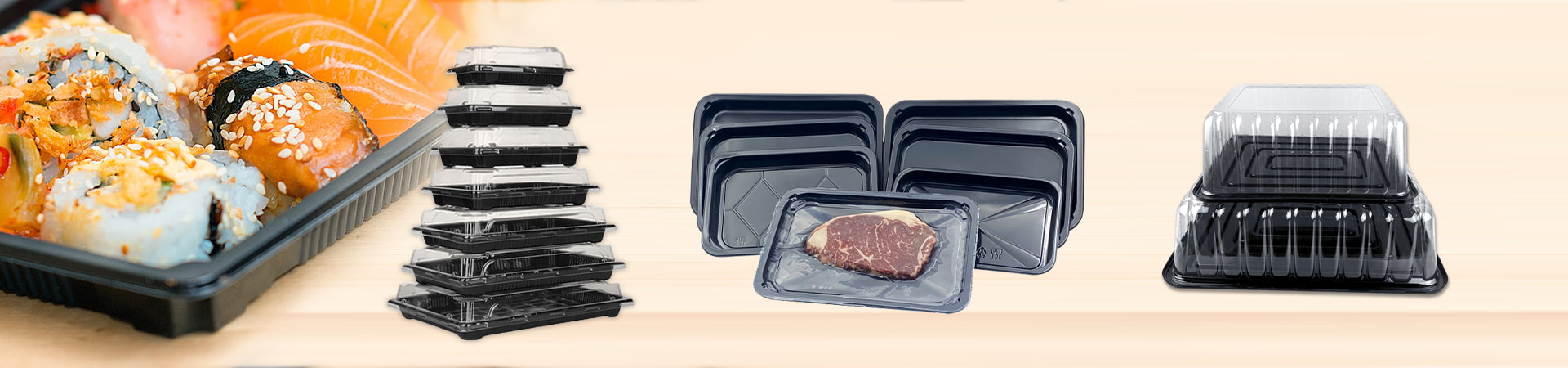
Whether you produce sushi, baked goods, fresh salads, meal kits, or frozen foods, the right packaging solution can reduce damage rates, strengthen brand recognition, and create a better customer experience. This guide explores how custom food packaging solutions improve product protection and brand presentation across different food categories — and what to look for when selecting a manufacturing partner.
Why More Food Brands Are Choosing Custom Food Packaging
The shift from generic to custom food packaging is not just a trend — it is a practical response to the real costs and limitations of standard packaging. Off-the-shelf containers may seem convenient, but they often create problems that only become visible after products reach shelves, shipping containers, or customers' hands.
Food brands are increasingly choosing custom packaging for several compelling reasons:
- Better Product Fit: Custom trays and containers are designed around a specific product's dimensions, so items sit securely without excessive empty space or cramped cavities. This eliminates the product movement that causes damage during transport.
- Stronger Product Protection: Custom designs can incorporate reinforced corners, secure lid closures, and shock-absorbing structures that standard packaging cannot provide. For delicate foods like pastries, sushi rolls, or fresh berries, this protection translates directly into fewer returns and less waste.
- Professional Brand Appearance: A well-designed container signals quality before the customer even opens it. When packaging fits a product precisely and looks intentional rather than improvised, it builds consumer confidence and supports premium pricing.
- Reduced Packaging Waste: Custom-sized packaging eliminates the need for filler materials and oversized containers, reducing material consumption per unit. For brands with sustainability goals, this reduction in packaging material can be a meaningful differentiator.
- Consistent Supply Chain: Working directly with a food packaging manufacturer ensures consistent quality across production batches rather than dealing with the variability that comes from sourcing generic containers from multiple distributors.
Better Product Protection Throughout the Supply Chain
For food businesses, product damage during transportation is not just a quality issue — it is a direct cost. Every crushed cake container, cracked salad bowl, or displaced sushi tray represents lost revenue, wasted product, and potentially a damaged relationship with a retail or foodservice customer.
Thermoformed food packaging designed specifically for your product addresses protection at multiple levels:
- Transportation Protection: Custom trays engineered with the right material thickness and structural design absorb shock and vibration during shipping. For delicate items — like macarons in a macaron tray insert or decorated cakes in a domed disposable cake holder — this protection is critical to maintaining product integrity from factory to shelf.
- Stackability: Custom packaging can be designed with interlocking or nesting features that allow containers to be stacked securely without crushing lower layers. This improves pallet utilization and reduces shipping costs per unit.
- Product Stability: When a tray cavity matches the product's exact shape, items do not shift during handling. For custom sushi packaging, this means rolls and pieces stay in position; for plastic salad containers, it means ingredients remain layered and visually appealing.
- Leak Prevention: For prepared foods with sauces, dressings, or moisture content, custom tray designs can incorporate sealed compartments and secure lid systems that prevent leaks during transport and handling.
Improve Shelf Appeal and Customer Experience
Consider how a customer encounters your product at a supermarket, convenience store, or foodservice counter. The packaging is the first thing they see — before they taste the food, before they read the label, and often before they notice the price. In that critical moment, custom plastic food packaging either invites purchase or becomes invisible among competitors.
Several factors make custom packaging more effective at driving purchase decisions:
- Product Visibility: Transparent PET packaging allows customers to see exactly what they are buying. This is especially important for fresh food categories — a transparent fruit packaging box that clearly displays vibrant produce, or a clear sushi container that shows the quality of the fish and rice. Visibility builds trust and reduces hesitation.
- First Impression of Quality: A container that fits perfectly, seals cleanly, and looks intentional signals that the brand invested in quality — which customers associate with better food inside. Custom packaging elevates the perceived value of even everyday food products.
- Consumer Confidence: When packaging performs well — a lid that opens smoothly without cracking, a tray that does not warp under temperature changes, compartments that keep food items separate — the customer's experience is positive from the first interaction to the last bite.
- Shelf Organization: Custom packaging can be designed for specific retail display formats — upright on shelves, hanging on pegs, or stacked in refrigerated cases — helping your product stand out and making restocking more efficient for retailers.
Custom Packaging for Different Food Products
Each food category has distinct packaging requirements, and a one-size-fits-all approach rarely delivers the best results. The most effective food packaging design starts with understanding the specific needs of the product.
Sushi: Sushi packaging must balance product visibility with secure containment. Transparent lids allow customers to see the freshness and arrangement of rolls, while snug compartments prevent pieces from sliding during transport. Custom sushi containers can be designed with specific compartment layouts for different roll sizes, sauce wells, and tamper-evident features.
Bakery Products: Cakes, pastries, and baked goods are particularly vulnerable to crushing and movement damage. A custom cake holder with lid provides structural protection while the transparent dome showcases the product. For delicate items like macarons, custom macaron tray inserts hold each piece in an individual cavity, preventing the surface damage that occurs when pieces contact each other.
Fresh Produce: Fruits and vegetables need packaging that balances visibility with ventilation. Custom fruit packaging can include air vents to control humidity, transparent panels for product display, and stacking features for efficient transport.
Salads and Prepared Foods: Salad containers face unique challenges — they must be leak-resistant, provide enough volume for ingredients, and maintain visual appeal with layered ingredients. Custom salad containers can be designed with the right depth, compartment options, and lid seal to keep fresh ingredients looking their best from production to consumption.
Ready Meals and Food Trays: For prepared meals, custom food trays with multiple compartments keep different food items separate — preventing moisture migration, flavor mixing, and texture changes. This is particularly important for meal prep, airline catering, and frozen food applications.
How Custom Packaging Can Reduce Long-Term Costs
The initial cost of developing custom food packaging — particularly mold development — can be higher than ordering stock containers off the shelf. However, for businesses with consistent production volumes, custom packaging often delivers a lower total cost of ownership when you account for the full supply chain.
Here is where custom packaging creates cost savings over time:
- Better Material Utilization: Custom packaging uses exactly the right amount of material for your product — no oversized containers that waste plastic or require filler inserts. Across thousands of units, this material efficiency adds up to significant savings.
- Fewer Damaged Products: When packaging is designed for a specific product, damage rates drop. Fewer returns, fewer replacements, and less waste mean more of your production investment reaches customers as sellable product. For high-value or delicate food items, reducing damage by even a few percentage points can offset the entire packaging investment.
- Improved Logistics Efficiency: Custom containers that stack efficiently and maximize pallet utilization reduce shipping costs per unit. When more products fit in a shipping container, your freight cost per item decreases.
- Reduced Packaging-Related Labor: Packaging that fits products properly speeds up packing lines and reduces the time spent adjusting, re-packing, or manually adding protective materials. This improves throughput without adding labor costs.
The key is to work with a food packaging supplier who understands your production scale and can design packaging that balances protection, presentation, and cost efficiency from the start — rather than trying to fix problems with packaging that was never designed for your product in the first place.
What to Look for in a Food Packaging Manufacturer
Selecting the right food packaging manufacturer is one of the most consequential decisions in a custom packaging project. The manufacturer's capabilities directly impact packaging quality, development speed, production consistency, and your ability to scale as demand grows.
When evaluating potential partners, focus on these capabilities:
- Material Expertise: The manufacturer should understand the properties and applications of food-grade materials — PET for transparency and rigidity, PP for heat resistance and durability — and be able to recommend the right material based on your product's storage conditions, transportation requirements, and regulatory needs.
- Design Capability: In-house packaging design support means the manufacturer can help optimize your tray structure, suggest improvements to cavity layout, and identify material-saving design changes before mold development begins. This collaborative design process often produces better results than simply sending specifications to a production-only facility.
- In-House Mold Development: Manufacturers who develop molds internally can control the quality and timeline of this critical step rather than relying on third-party mold makers. This typically means faster turnaround and better coordination between mold design and production.
- Thermoforming Production: Modern thermoforming equipment with precise temperature and pressure control produces consistent results across large production runs. Ask about the manufacturer's production capacity and whether they can scale with your growth.
- Quality Inspection: A structured quality control process — from incoming material inspection through in-process monitoring to final inspection — ensures every batch meets your specifications. For food packaging, this should include checks for dimensional accuracy, material thickness, clarity, and cleanliness.
- Export Experience: If you are importing packaging, work with a manufacturer who understands export logistics — including proper packaging for container shipping, customs documentation, and Incoterms. An experienced exporter can help you navigate international shipping efficiently.
Jiasheng provides all of these capabilities as an integrated service — from design consultation and in-house mold development to thermoforming production, quality inspection, and export logistics. This end-to-end approach eliminates the coordination gaps that often slow down projects when design, tooling, and production are handled by separate companies.
Frequently Asked Questions
Why choose custom food packaging instead of standard packaging?
Custom food packaging is designed specifically for your product's dimensions, weight, and distribution environment. This means better product fit, stronger protection during transport, a more professional brand appearance, and often lower total cost when you account for reduced damage, less material waste, and improved logistics efficiency. Standard packaging may appear cheaper upfront, but the hidden costs of poor fit, product damage, and generic appearance often outweigh the initial savings.
Can custom food packaging improve transportation efficiency?
Yes. Custom packaging can be designed with stacking features, optimized dimensions for pallet utilization, and structural designs that allow more units per shipping container. When containers stack securely and use space efficiently, both per-unit shipping cost and damage rates decrease. For businesses shipping internationally, these logistics improvements can represent substantial savings over time.
What information is needed before customizing food packaging?
To begin a custom packaging project, prepare your product dimensions (length, width, height, and weight), the intended application (retail display, foodservice, export, etc.), estimated order quantity, any material preferences (such as PET or PP), and any special requirements like compartment design, labeling needs, or regulatory compliance. If you have CAD drawings, 3D files, or physical product samples, these help the manufacturer develop accurate prototypes more quickly.
How long does custom packaging production take?
The timeline for custom food packaging development typically ranges from 3 to 6 weeks, depending on design complexity and mold requirements. This includes packaging design confirmation, mold fabrication, sample production, and sample shipping and approval. Projects using existing mold libraries or simpler tray designs may move faster, while complex multi-cavity packaging may require additional design and testing time.
Invest in Packaging That Works for Your Business
In the food industry, custom food packaging is not an expense — it is an investment in product quality, brand perception, and supply chain performance. The right packaging reduces damage, strengthens shelf presence, and creates a consistent experience that builds customer trust and repeat purchases. For food brands that compete on quality rather than price alone, custom packaging is one of the most direct ways to communicate that quality to customers before they ever taste the product.
When selecting a packaging partner, look beyond unit price and evaluate the manufacturer's full capabilities — design support, material knowledge, mold development, production quality, and export experience. A partner who brings all of these capabilities together can shorten your development timeline, reduce coordination overhead, and deliver packaging that performs reliably from production through distribution to the end consumer.
Jiasheng provides customized thermoformed food packaging solutions for global food manufacturers, bakery brands, and foodservice companies. With in-house design, mold development, thermoforming production, and export logistics, we support customers from concept to delivery — helping food businesses bring better-packaged products to market efficiently and consistently.
Contact Jiasheng to Create Custom Food Packaging Solutions for Your Brand
Tell us about your product and packaging needs. We will provide design recommendations, material options, and a customized proposal tailored to your brand and budget.
Get Your Custom Packaging Quote