
Your Cart
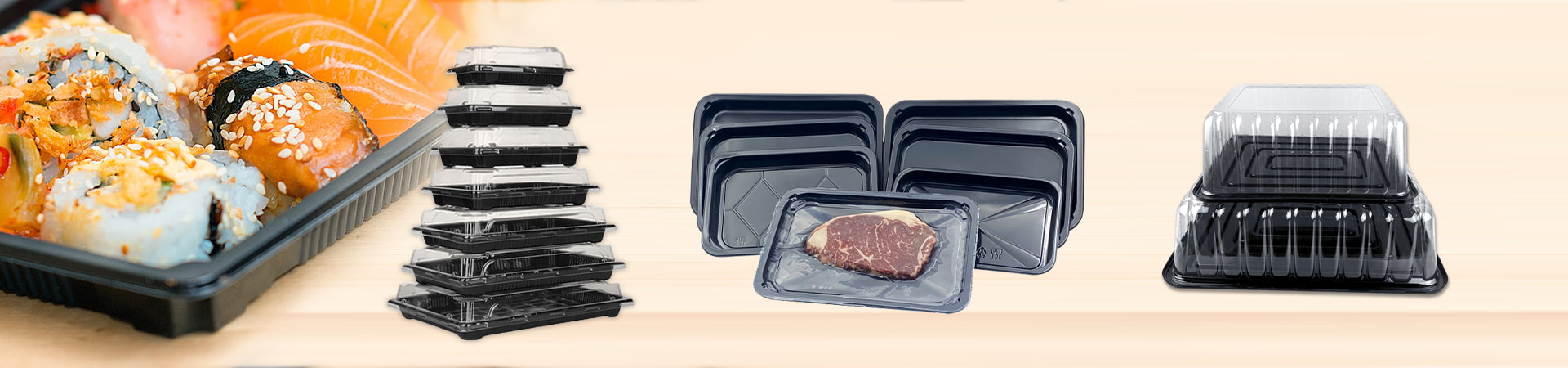
Food Grade Plastic Packaging: What Food Manufacturers Should Know Before Choosing a Supplier
Selecting food grade plastic packaging involves far more than picking a container off a catalog page. The right packaging must protect food quality during transport and storage, meet hygiene requirements for direct food contact, present products attractively on retail shelves, and integrate smoothly into existing production and packing lines. A decision based solely on unit price often leads to packaging that fails in one of these areas — costing far more in returns, waste, and brand damage than the initial savings.
For food manufacturers, frozen food companies, bakery brands, ready-meal producers, and fresh produce suppliers, understanding what makes packaging truly food-grade — and what separates a reliable food packaging manufacturer from an unreliable one — is essential. This guide covers the materials, evaluation criteria, and application considerations that matter most when choosing a food grade plastic packaging supplier.
What Is Food Grade Plastic Packaging?
Food grade plastic packaging refers to plastic containers and trays that are safe for direct contact with food products. While this definition sounds straightforward, meeting it requires attention across multiple dimensions — not just the raw material itself.
Three conditions must be satisfied for packaging to be considered genuinely food-grade:
- Suitable Materials: The plastic resin used must be approved for food contact by relevant regulatory standards. Common food-safe plastics include PET and PP, which are widely accepted for direct food contact applications across international markets.
- Hygienic Manufacturing: The production environment and processes must prevent contamination. This includes clean workshop conditions, proper material handling procedures, and regular equipment sanitation — all of which contribute to food safe plastic packaging that meets industry expectations.
- Consistent Quality: Every production batch should deliver the same material properties, dimensional accuracy, and cleanliness. Inconsistent quality — even from approved materials — creates risk for food manufacturers who depend on packaging to protect their products batch after batch.
What many food buyers overlook is that the manufacturing environment matters just as much as the material itself. A PET sheet produced in a properly managed facility is not the same as one from a supplier with poor quality controls, even if both carry the same material designation.
Common Materials Used in Food Grade Plastic Packaging
Different food packaging materials serve different purposes. Understanding the characteristics of the most commonly used plastics helps food manufacturers match the right material to each application.
PET (Polyethylene Terephthalate)
PET is the most widely used material for transparent food packaging. Its exceptional clarity makes it the preferred choice when product visibility is important to the customer experience.
Key characteristics of PET for food packaging:
- Excellent Transparency: PET containers allow customers to see the product clearly, which is particularly important for fresh foods where visual appeal drives purchase decisions.
- Good Rigidity: PET trays and containers hold their shape well, providing reliable structural protection during stacking and transport.
- Common Applications:sushi containers, salad containers, and bakery packaging frequently use PET for its combination of clarity and structural performance.
PP (Polypropylene)
PP is valued for its heat resistance and durability, making it suitable for applications where PET may not be the best fit.
Key characteristics of PP for food packaging:
- Higher Heat Resistance: PP can withstand higher temperatures than PET, making it suitable for microwavable meal trays and hot-fill applications where the packaging must tolerate elevated temperatures without deforming.
- Good Durability: PP trays are resistant to cracking and provide reliable performance in high-volume handling environments.
- Common Applications:food trays for takeaway meals, meal prep containers, and packaging for products that require reheating typically use PP for its thermal stability.
The choice between PET and PP ultimately depends on the specific requirements of each food product: whether transparency or heat resistance is the priority, what storage and transport conditions the packaging will face, and whether the end consumer will reheat the product in its packaging.
Key Factors When Choosing Food Grade Plastic Packaging
Beyond material selection, several practical factors determine whether food grade plastic packaging will actually perform in real-world conditions. Food manufacturers evaluating packaging options should consider the following criteria:
Food Protection: The primary function of any food packaging is to prevent physical damage, contamination, and quality degradation. Packaging must protect products from crushing during stacking, keep out dust and contaminants, and maintain seal integrity throughout the distribution chain. A container that looks good on the shelf but fails during transport creates more problems than it solves.
Product Visibility: For many food categories — sushi, salads, fresh produce, baked goods — visual presentation directly influences consumer purchasing decisions. Transparent PET packaging allows customers to assess product freshness and quality before buying, building trust and encouraging purchase.
Transportation Performance: Food packaging must survive the journey from production facility to retail shelf. This includes withstanding vibration during truck transport, resisting compression when stacked in shipping containers, and maintaining structural integrity through multiple handling steps. Packaging that performs well in a controlled environment but fails during real-world logistics creates unacceptable levels of product loss.
Packaging Strength: Tray walls, lid fit, and overall structural design must be appropriate for the product weight and handling conditions. Overly thin material may save cost per unit but dramatically increases damage rates, while unnecessarily thick material adds cost without meaningful benefit. A professional plastic food packaging supplier can recommend the right gauge for each application.
Material Consistency: Batch-to-batch consistency in material quality, color, and thickness ensures that packaging performs predictably every time. Variation in any of these parameters can disrupt automated packing lines, cause sealing failures, or create visible quality differences that customers notice on the shelf.
How to Evaluate a Food Packaging Manufacturer
Choosing the right food grade plastic packaging manufacturer is a decision that affects product quality, supply chain reliability, and long-term costs. Here are the criteria that matter most when evaluating potential suppliers:
Manufacturing Experience: A manufacturer with experience across multiple food categories — sushi, bakery, fresh produce, salad, ready meals — brings practical knowledge that helps avoid common packaging mistakes. They understand how different food types interact with packaging materials and can anticipate issues that less experienced suppliers might miss.
Material Selection Support: The best suppliers do not simply ask customers to specify a material — they offer guidance based on the food product type, storage conditions, and performance requirements. A food packaging manufacturer with strong material expertise can recommend the right combination of plastic type, thickness, and structural design for each application.
Thermoforming Capability: In-house thermoforming production — covering everything from sheet heating and mold forming to trimming and quality inspection — gives a manufacturer full control over quality. This is particularly important for custom food packaging projects where precise forming and consistent output matter more than with generic containers.
Quality Inspection: A structured quality control process should cover incoming material verification, in-process monitoring, and finished product inspection. For food packaging, inspection should confirm not only dimensional accuracy and visual appearance but also cleanliness and freedom from defects that could compromise food safety.
Export Experience: For food manufacturers importing packaging from overseas, a supplier with export experience provides significant advantages: proper export packaging that protects containers during sea freight, familiarity with customs documentation, and the ability to coordinate shipping logistics efficiently.
Food Grade Packaging for Different Food Applications
Different food products place different demands on packaging. Understanding these application-specific requirements helps food manufacturers select the right packaging solution from the start.
Sushi
Sushi packaging must balance several competing requirements: transparent presentation to showcase the product's visual appeal, secure lid closure to prevent shifting during transport, and sufficient structural strength to protect delicate rolls and pieces. Food packaging for sushi typically uses clear PET containers with fitted lids that keep each piece in place while maintaining an attractive display. For businesses requiring specific compartment layouts or branding elements, custom food packaging solutions can be developed to match exact product specifications.
Bakery
Bakery products — from cakes and pastries to macarons and cupcakes — require packaging that protects delicate decorations while providing an attractive retail display. Clear bakery packaging with dome lids protects product height, while macaron tray inserts keep individual pieces separated and stable. The key design considerations for bakery packaging include dome clearance for decorated tops, secure base attachment to prevent lid separation during handling, and material clarity to showcase product appearance.
Fresh Produce
Fresh fruits and vegetables need packaging that provides visibility, ventilation, and protection against crushing. Fruit and vegetable packaging often incorporates vented designs that allow air circulation while keeping produce visible and protected. For berries, leafy greens, and other delicate produce, the packaging must prevent compression damage while still allowing stacking for efficient retail display and transport.
Salad
Salad packaging faces the unique challenge of keeping fresh ingredients looking appealing while managing moisture and preventing wilting. Plastic salad containers need secure sealing to prevent leaks, sufficient volume for mixed ingredients, and clear material that shows the freshness of the contents. For foodservice and retail applications, stackable designs improve transport efficiency and shelf organization.
Questions to Ask Before Ordering Food Grade Plastic Packaging
Asking the right questions before placing an order helps avoid misunderstandings, delays, and packaging that does not meet expectations. Here are the essential questions to discuss with a potential supplier:
Which material do you recommend for my food product? A knowledgeable manufacturer should be able to recommend PET, PP, or another material based on your product type, storage temperature, and display requirements — rather than simply asking you to specify.
Can you customize tray dimensions and compartment layouts? Custom sizing and multi-compartment designs allow packaging to fit products precisely, reducing movement during transport and improving presentation. Confirm whether the manufacturer offers mold development in-house, as this significantly affects lead time and cost.
What is your production capacity and typical lead time? Understanding a supplier's production capability helps ensure they can meet your volume requirements — both for initial orders and for ongoing production as your business grows.
Can samples be provided before full production? Physical samples allow you to verify fit, function, and appearance before committing to a production run. A supplier that provides pre-production samples demonstrates confidence in their manufacturing quality and commitment to customer satisfaction.
What information is needed before providing a quotation? Being prepared with product dimensions, estimated order quantity, material preference, and application details helps suppliers provide accurate pricing and realistic timelines — reducing back-and-forth communication and accelerating the project.
Frequently Asked Questions
Q: Is PET food grade?
Yes. PET (Polyethylene Terephthalate) is widely recognized as a food-safe plastic and is approved for direct food contact by regulatory authorities in major international markets. It is commonly used for thermoformed food packaging including sushi containers, salad containers, fruit packaging, and bakery packaging. The key is not just the material itself but also the manufacturing conditions — food-grade PET packaging must be produced in a clean, controlled environment to maintain its safety for food contact.
Q: Is PP suitable for food packaging?
Yes. PP (Polypropylene) is food-safe and widely used in food packaging applications. It offers advantages for specific use cases: higher heat resistance makes it suitable for microwavable meal trays and hot-fill applications, and its durability provides reliable performance in high-volume food service environments. The choice between PP and PET depends on whether heat resistance or optical clarity is the higher priority for a given food product.
Q: Can food packaging be customized?
Yes. Professional food packaging manufacturers offer customization across multiple dimensions: tray dimensions, compartment layouts, material type and thickness, lid design, and structural features such as stacking ribs or reinforced corners. Custom mold development allows packaging to be designed around specific product dimensions, ensuring a precise fit that improves protection and presentation. The customization process typically begins with product specifications and moves through design, mold development, sampling, and production.
Q: How do I choose a reliable food packaging supplier?
Look for a supplier with demonstrated experience in your food category, in-house thermoforming capability, structured quality control processes, and the ability to provide material recommendations based on your specific product requirements. A reliable food packaging manufacturer should also offer pre-production samples, provide clear communication about lead times and production capacity, and have experience with export logistics if you are importing packaging from overseas.
Conclusion
Choosing food grade plastic packaging is a decision that reaches far beyond unit cost. The right packaging protects food quality throughout the supply chain, presents products attractively to consumers, and integrates smoothly into production and logistics operations. The wrong packaging — whether due to unsuitable materials, inconsistent quality, or poor structural design — creates problems that multiply across every step from production to customer.
When evaluating packaging and suppliers, focus on four areas that have the greatest impact on long-term results:
- Material: Choose between PET and PP based on your product's specific needs — transparency and rigidity for display-focused applications, heat resistance and durability for hot-fill or reheatable products.
- Manufacturing: Select a supplier with demonstrated food packaging experience, in-house thermoforming capability, and hygienic production practices that ensure consistent, safe output.
- Customization: Work with a manufacturer who can develop packaging around your product dimensions rather than asking you to adapt your product to fit an existing container.
- Quality Control: Verify that the supplier maintains structured inspection processes covering material verification, in-process monitoring, and finished product checks.
Jiasheng provides food grade plastic packaging designed and manufactured for food manufacturers worldwide. From material selection and mold development to thermoforming production and export logistics, Jiasheng supports customers with end-to-end thermoformed food packaging solutions tailored to each product's requirements.
Contact Jiasheng to Develop Food Grade Plastic Packaging for Your Products
From material selection and mold development to thermoforming production and export logistics, Jiasheng provides end-to-end food grade packaging solutions tailored to your food products. Contact us to discuss your requirements.
Get a Quote