
Your Cart
Cupcake Containers for Bakeries: How to Package Cupcakes So the Frosting Arrives Intact
A cupcake is judged twice before anyone tastes it: once through the shop counter glass, and once when the delivery box is opened. The second judgment is the risky one. Frosting that left the bakery in a perfect swirl arrives smeared across the lid, or a sponge has tipped against its neighbor — and the customer's photo of that box becomes your public review.
With online ordering and delivery now a standard part of bakery revenue, the container is doing more work than ever. This article looks at why cupcakes are uniquely punishing to package, what separates a cupcake container that survives delivery from a generic clamshell, and which details to confirm before you order for the next seasonal rush.
Why Cupcakes Fail in Transit
Cakes have structure; cupcakes have decoration at the exact height where every lid and every neighbor wants to be. Four failure modes come up again and again:
Tipping and rolling: A cupcake in a cavity that is even slightly too wide rocks with every corner the courier takes. Swirls smear, fruit toppings slide, and single-serve desserts arrive visibly second-hand.
Lid contact: Tall swirls and meringue peaks meet the lid the first time the box is stacked or the lid flexes under another pack. The frosting is the product's most fragile and most photogenic surface — and the first to touch plastic.
Condensation: Refrigerated buttercream moving into a sealed pack at room temperature fogs the lid within minutes. Drip-back onto the frosting softens it; a fogged lid hides the very decoration the customer paid for.
Stacking crush: Delivery bags and catering trays put boxes on top of boxes. A container with thin, unribbed walls transfers that load straight onto the swirls below.
What a Delivery-Proof Cupcake Container Actually Does
The difference between a generic hinged box and a purpose-built container is mostly invisible until the first delivery. Three jobs matter most.
It immobilizes each cupcake: A molded seat that grips the base — not just a flat well — keeps every cake upright and evenly spaced. The open-view photo below shows the formed cavities doing exactly that on a three-count format.
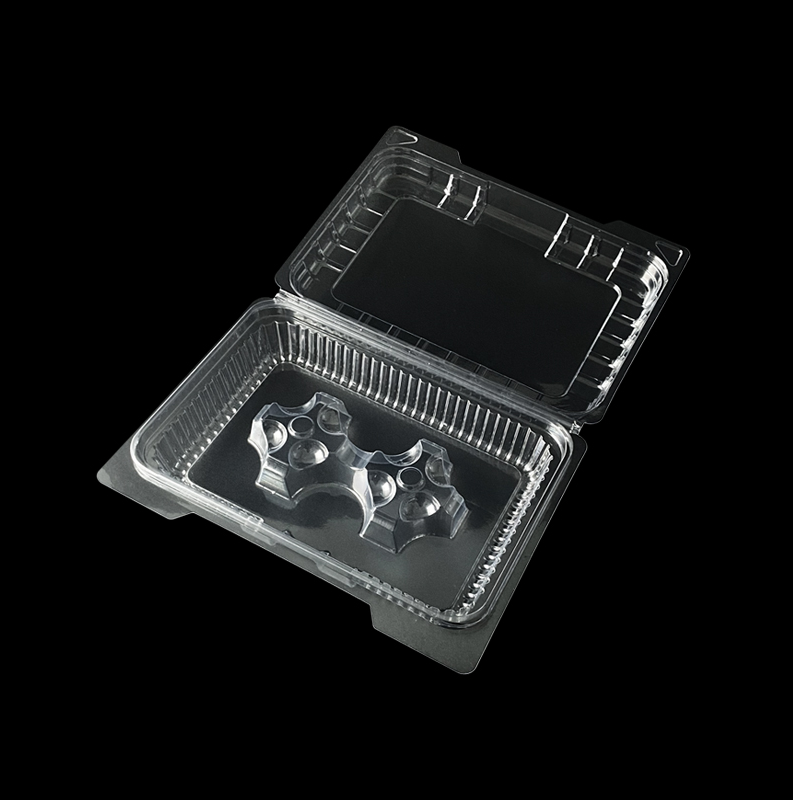
It gives the swirl headroom: Lid height is a specification, not a coincidence. The container must clear the tallest decoration you sell — including the fruit and toppers — with enough clearance that stacking never presses the lid onto frosting.
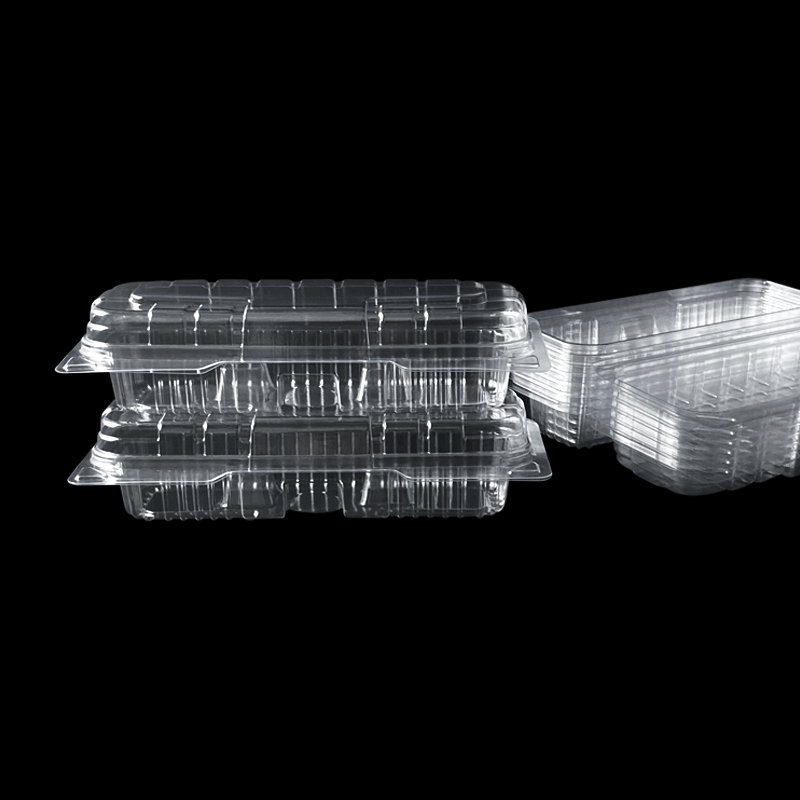
It closes with intent: A secure, multi-point lid lock keeps the pack shut through courier bags and door drops, while deep structural ribs let closed containers stack without the load reaching the product. The same ribs that look decorative on the closed pack above are what make four boxes ride on top of each other safely.
Container Formats and When to Use Each
Single-serve and multi-count clamshells: Two, three, and four-count formats suit café counters and delivery singles. Clear PET cupcake containers with secure lids in this class are the workhorse for takeaway and courier orders — one product, one closed unit, no assembly.
Six and twelve-count trays: Party orders and events need counts that pack into a carry bag without shifting. Deeper cavities and heavier walls earn their cost here, because a twelve-count failure is twelve refunds.
Tall-display formats: For oversized swirls and topped desserts, taller thermoformed containers — such as the thermoformed cupcake containers in the display range — trade a little case space for the headroom that protects the decoration.
Larger desserts and carriers: Mini cakes and gateaux sit one tier up in disposable cake containers and carriers with dome lids; keeping one supplier across both ranges keeps lids, labels, and cases consistent.
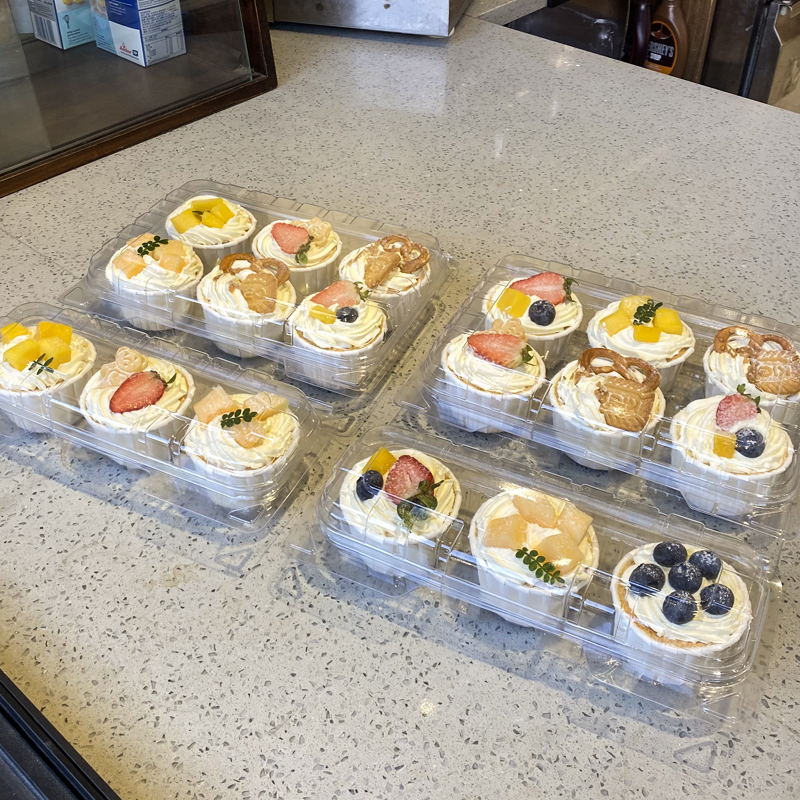
Whichever format you pick, the presentation logic is the same: clear material lets the customer see the decoration without opening the pack — at the counter, in the delivery photo, and on social media. We covered the display side of this in more depth in our article on thermoformed cupcake packaging for protection and presentation.
Material: Compliance, Clarity, and Cold Chains
Food-contact certification first: Frosting is a high-fat, sometimes refrigerated food, so the container needs food-grade certification for the finished pack, with documentation your market accepts. Treat this as a screening question, not a differentiator.
Clear PET-family grades: Rigid PET gives the optical clarity that sells decoration, keeps stiffness at low gauge weight, and sits in the recycling stream most markets already collect — increasingly relevant as packaging rules tighten.
Cold-chain behavior: Ask how the material performs coming out of refrigeration. An anti-fog grade, or a lid design that sheds condensation away from the product, is the difference between a photogenic arrival and a fogged one.
Six Things to Confirm Before Ordering
1. Your tallest decoration: Measure the tallest swirl or topper you actually sell, including seasonal specials, and add clearance. Lid height is decided here.
2. Cupcake base diameter: Cavity fit should grip the liner, not the sponge. A few millimeters decide whether deliveries arrive upright.
3. Counts per pack: Match formats to how customers actually buy — singles for cafés, sixes and twelves for events.
4. Delivery reality: Courier bags, stacking in transit, door drops. Specify wall ribs and lid locks against that load, not against a shop shelf.
5. Refrigeration: If you chill frosted lines, confirm anti-fog performance and low-temperature stiffness with your own product.
6. Samples before volume: Run your real cupcakes through a delivery loop in the candidate container — free sample services exist for exactly this test, and custom cavity sizes can be developed through customization services when your decoration does not fit a standard mold.
Four Questions to Ask a Cupcake Container Supplier
1. What food-contact documentation comes with the finished container? Certification at the pack level, with the batch paperwork your market requires.
2. How much lid clearance does the design give over the cupcake seat? Get the numbers for cavity depth, total height, and lid underside — then compare them with your tallest product.
3. How do the containers perform stacked and chilled? Ask for stacking-load and low-temperature evidence, not just room-temperature samples.
4. Can we test with our own cupcakes before committing? The delivery loop, the fog test, and the lid-open moment are all decided on real product.
Frequently Asked Questions
What material is best for cupcake containers?
Food-grade rigid PET is the usual choice for bakery takeaway: it is optically clear, stiff enough to stack at a light weight, and recyclable in most markets. Confirm food-contact certification for the finished container.
How do I stop frosting from sticking to the lid?
Choose a container with enough lid headroom for your tallest decoration, and check that stacking in delivery will not press the lid down. Condensation makes contact worse, so chilled products benefit from anti-fog material grades.
Are clear containers better than boxes for cupcakes?
For takeaway, delivery, and social-media exposure, yes: the customer sees the decoration without opening the pack, which reduces handling and photographs well. Boxes still suit gift and occasion formats where print carries the brand.
Which counts should a bakery stock?
Most bakeries run singles or two-to-four counts for counters and delivery, plus a six or twelve count for events. Two formats usually cover most of the order book; a third for seasonal gifting is common.
Are PET cupcake containers recyclable?
Clear PET containers fit the established PET recycling stream in most markets, which is one reason they are favored under tightening packaging rules. Confirm the requirements of your destination market when exporting.
The Container Is the Last Step of the Recipe
A cupcake is finished the moment the customer sees it — and on delivery orders, the container decides what they see. Cavities that hold each cake upright, lid height that clears the swirl, ribs that carry the stack, and clarity that shows the decoration: these details decide whether the order arrives as it left.
Jiasheng manufactures food-grade thermoformed cupcake containers in clear PET, with secure lids, stackable ribbed structures, and counts from single-serve to twelve. Send us your cupcake dimensions, decoration height, and delivery model, and we will recommend a container that arrives as beautifully as it was piped.
Get Delivery-Proof Cupcake Containers
Tell us your cupcake size, decoration height, and order counts. We will quote a food-grade container with samples for real delivery testing.
Request Cupcake Container Samples